What is PRP (Platelet-Rich Plasma)?
PRP stands for Platelet-Rich Plasma. It is a treatment that uses your own blood to help your body heal. Doctors take a small amount of your blood and spin it in a machine. This process separates the platelets from other blood parts. Platelets are tiny cells that help your body repair itself. Because PRP uses your own blood, it is a natural way to support joint healing. Many people now ask about PRP for joint healing because it is safe and uses your body’s own power.
How Does PRP Work for Joint Healing?
PRP works by delivering a high amount of healing cells to your injured joint. After your doctor injects PRP into the joint, the platelets release growth factors. These growth factors help repair tissues, reduce swelling, and ease pain. As a result, your body starts to heal itself faster. For example, PRP therapy for knees is popular because it may help people with knee pain move better. In many cases, PRP can help joints heal naturally without surgery.
Common Joint Conditions Treated with PRP
Doctors use PRP for many joint problems. Some of the most common conditions include:Knee osteoarthritis (wear and tear of the knee joint)Shoulder pain from rotator cuff injuriesTennis elbow or golfer’s elbowAnkle sprainsHip pain from mild arthritisLigament or tendon injuries
In addition, orthopedic PRP treatment is often used when other treatments have not worked well. However, it is important to talk to your doctor to see if PRP is right for your joint problem.
Benefits of PRP Therapy
There are several reasons people choose PRP for joint healing. Some key benefits include:Uses your own blood, so there is little risk of rejectionMay reduce pain and swelling naturallyCan help you move your joint more easilyOften avoids the need for surgeryShort recovery time compared to other treatments
Moreover, many people like that PRP is a natural joint healing option. Still, results can vary from person to person.
The PRP Treatment Process
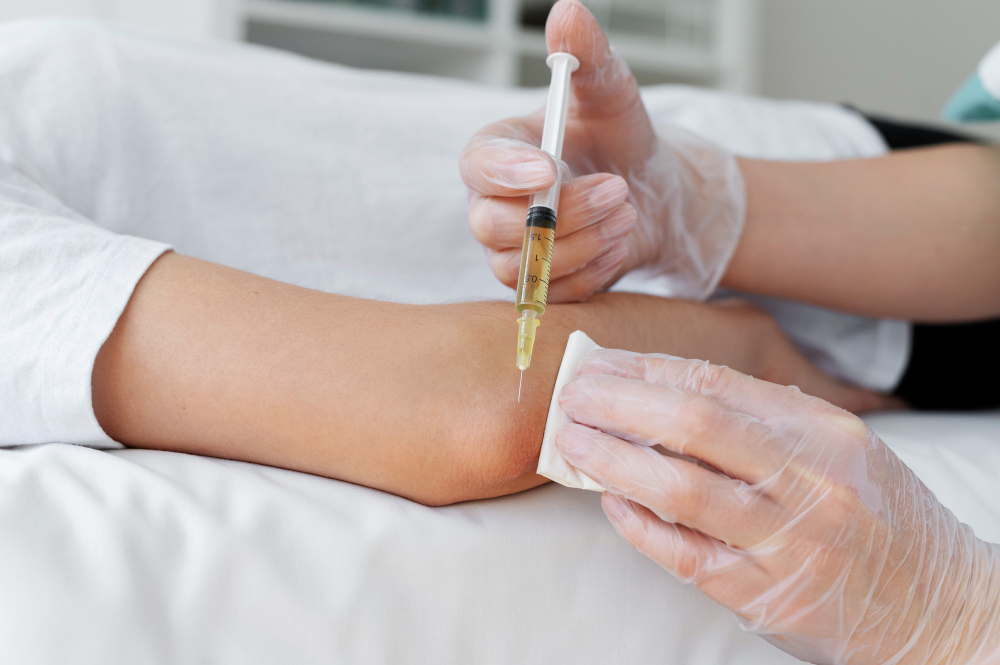
The PRP process is simple and quick. Here is what you can expect:Your doctor draws a small amount of your blood.The blood goes into a machine called a centrifuge. This machine spins the blood to separate the platelets.The doctor collects the platelet-rich plasma.Next, the doctor injects the PRP into your injured joint using a thin needle.
Usually, the whole process takes less than an hour. You can often go home the same day. For some people, more than one treatment may be needed.
Expected Results and Recovery
After PRP therapy, you may notice less pain and better movement in your joint. However, it can take a few weeks to see full results. Some people feel better after one treatment, while others need two or three sessions. During recovery, you may have mild swelling or soreness for a day or two. Most people return to normal activities quickly. Still, your doctor may ask you to rest the joint for a short time.
Safety, Risks, and Limitations
PRP is generally safe because it uses your own blood. However, as with any injection, there are some risks. These may include:Mild pain or swelling at the injection siteRarely, infection or bleedingAllergic reaction is very rare
It is important to know that PRP may not work for everyone. For example, people with severe joint damage may not get enough benefit. Always talk to your doctor about the risks and benefits before starting PRP therapy.
Lifestyle Tips to Support Joint Healing After PRP
After PRP treatment, you can help your joints heal by following these tips:Rest the joint as your doctor advisesUse ice packs to reduce swelling if neededDo gentle exercises or stretches as recommendedEat a healthy diet rich in fruits and vegetablesStay at a healthy weight to reduce joint stress
Additionally, avoid heavy lifting or high-impact sports until your doctor says it is safe. These steps can help you get the best results from your PRP therapy.
Prevention and Maintaining Joint Health
Even after PRP therapy, it is important to care for your joints. Here are some ways to keep your joints healthy:Stay active with low-impact exercises like walking or swimmingWarm up before exercise and stretch afterWear proper shoes to support your jointsMaintain a healthy weightAvoid smoking, as it can slow healing
By following these tips, you can help prevent future joint problems and enjoy better movement every day.
Conclusion: Talk to Your Doctor About PRP
In summary, PRP for joint healing is a natural way to help your body recover. It may reduce pain and improve movement for many joint problems. However, it is not right for everyone. Therefore, always consult SRS Ortho Specialty Clinics to see if PRP therapy is a good choice for you. Your doctor can give you advice based on your needs and help you plan the best care for your joints.